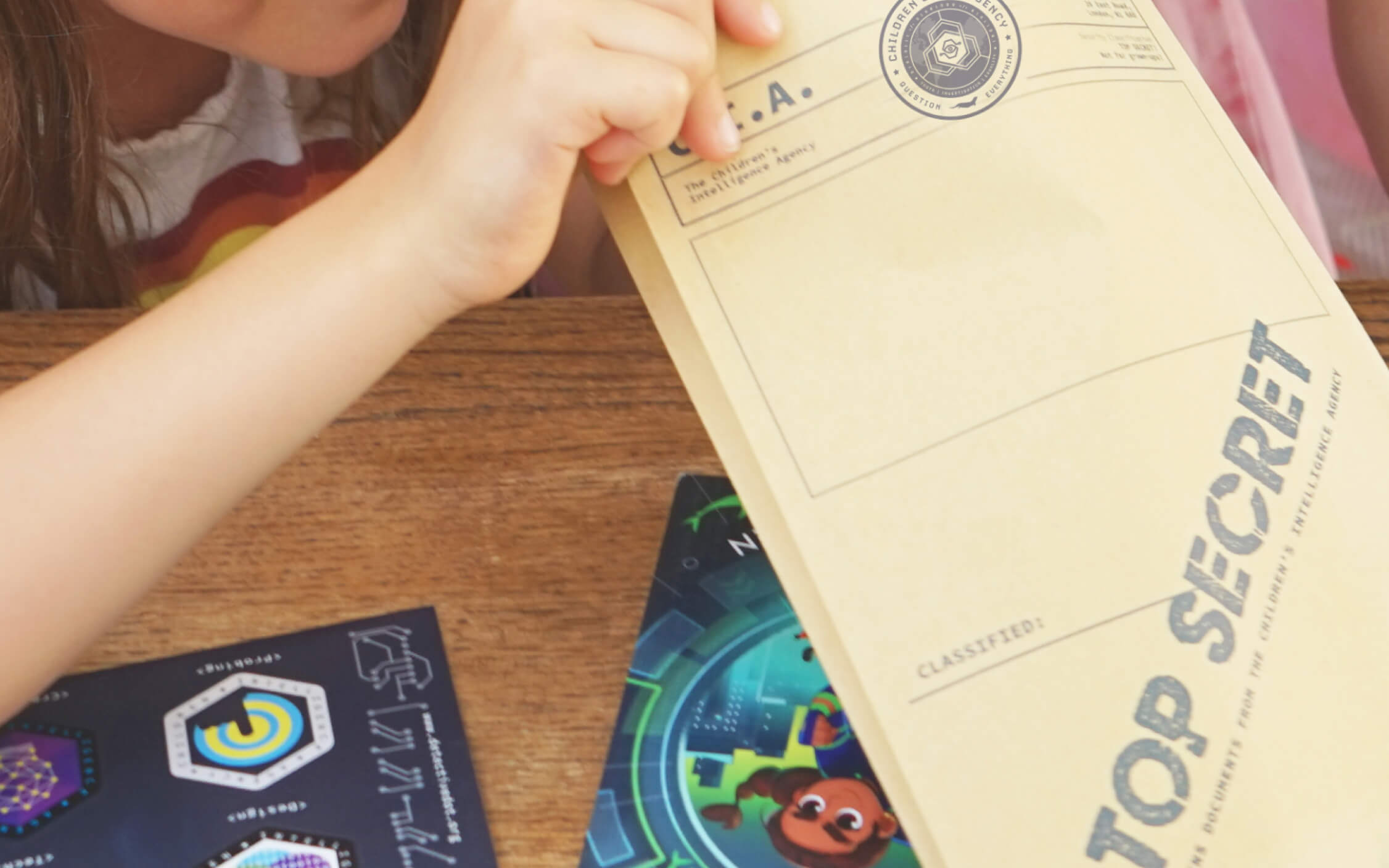
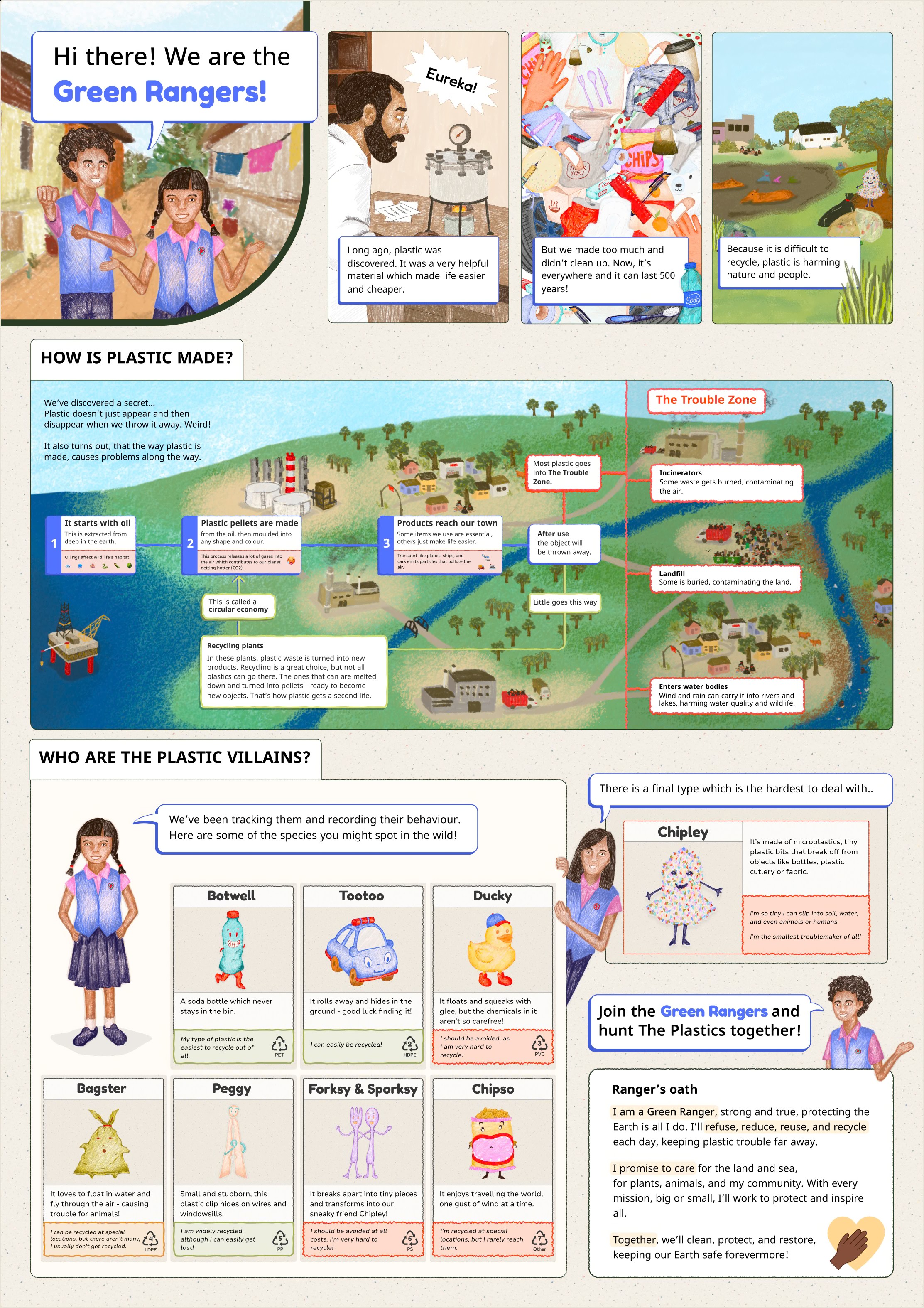
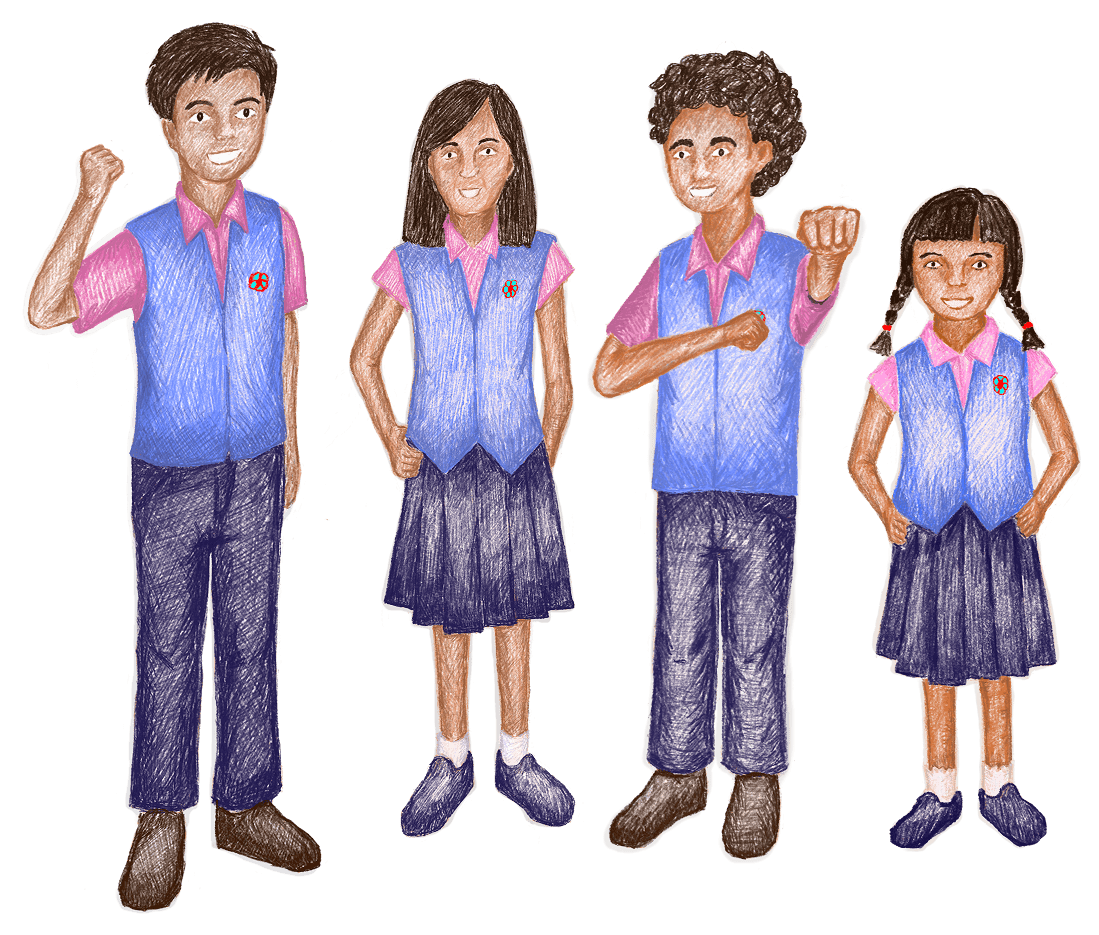
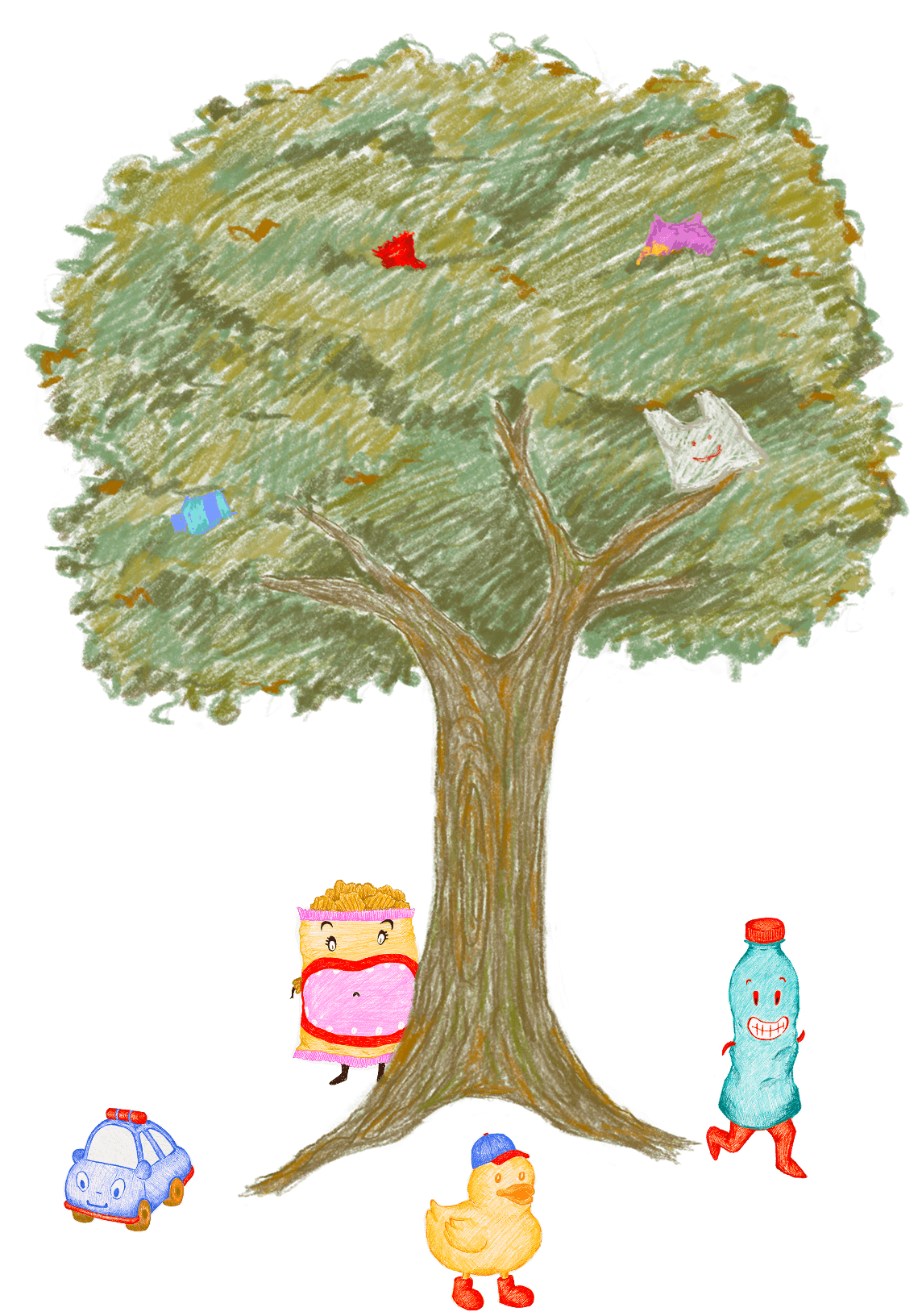
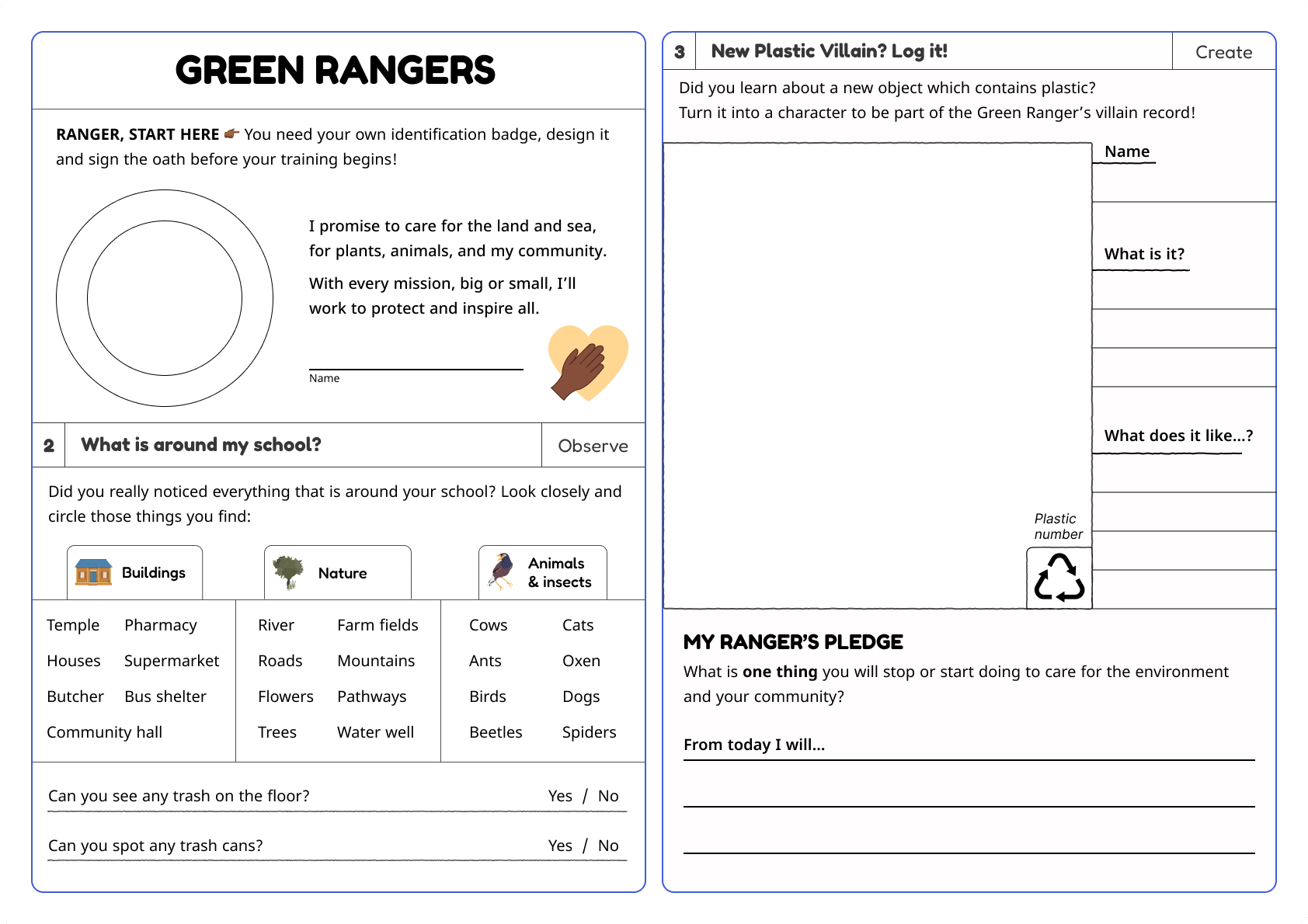
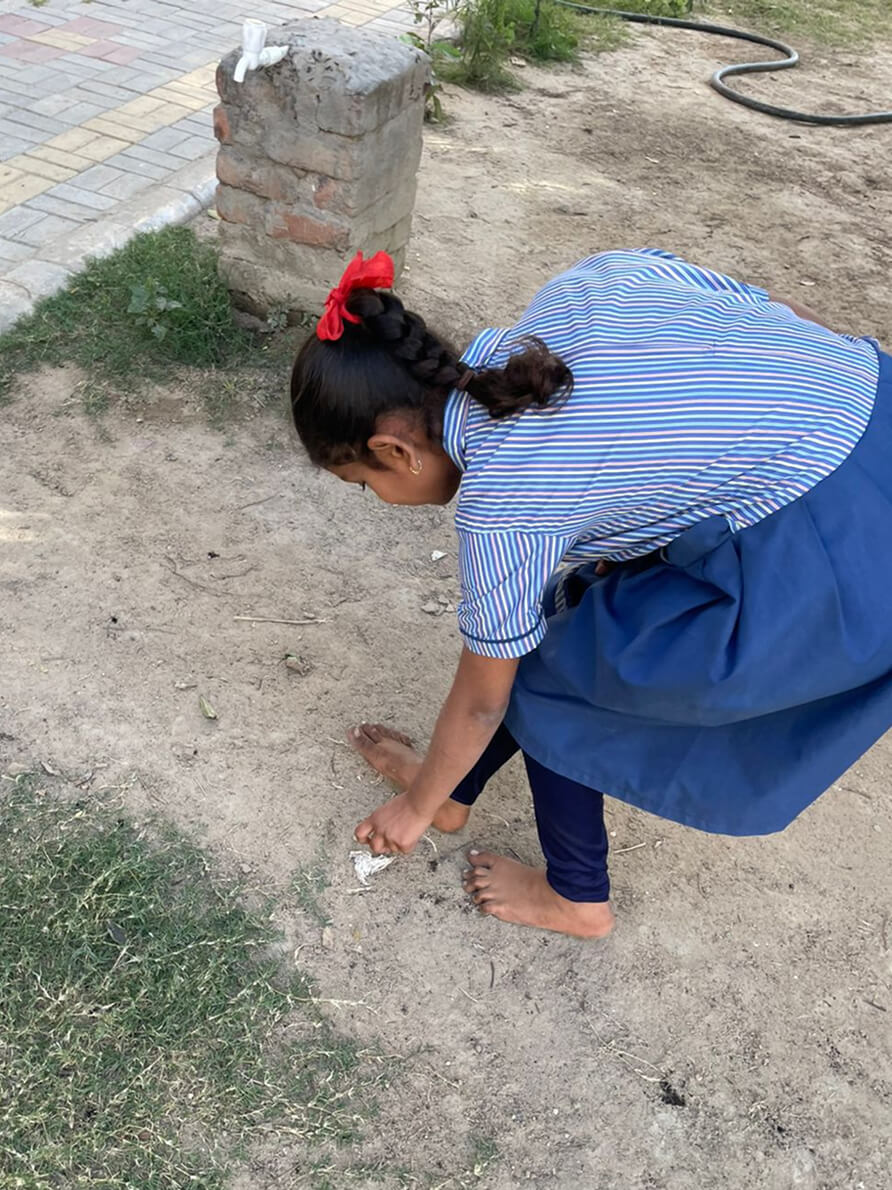
Green Rangers is a story-led classroom activity in which kids are invited to take the role of investigators. Through missions and activities, they learn about plastic, its impact on the environment and think of ways they can make changes in their community.
Role
Worked as the project lead of a team of 5 volunteers, guiding the project through the process provided by Design for Good, organising timelines and research, carrying out concept development and ideation sessions, and providing creative direction.
Always working very closely with our development partner, TIDE International, to ensure the material was accurate and suitable to fit within the local context of use.
A note on development
One of the aims of the Design for Good programme is to shift the design process from human-centred design to life-centred design, where the environment is considered alongside people within product and service development. This meant adapting tools like ecosystem mapping and personas to include the natural world.
Applying this in practice meant working closely with TIDE, based in India, to understand the education and societal ecosystem, including the systemic barriers to incorporating holistic topics like the environment into local curricula.
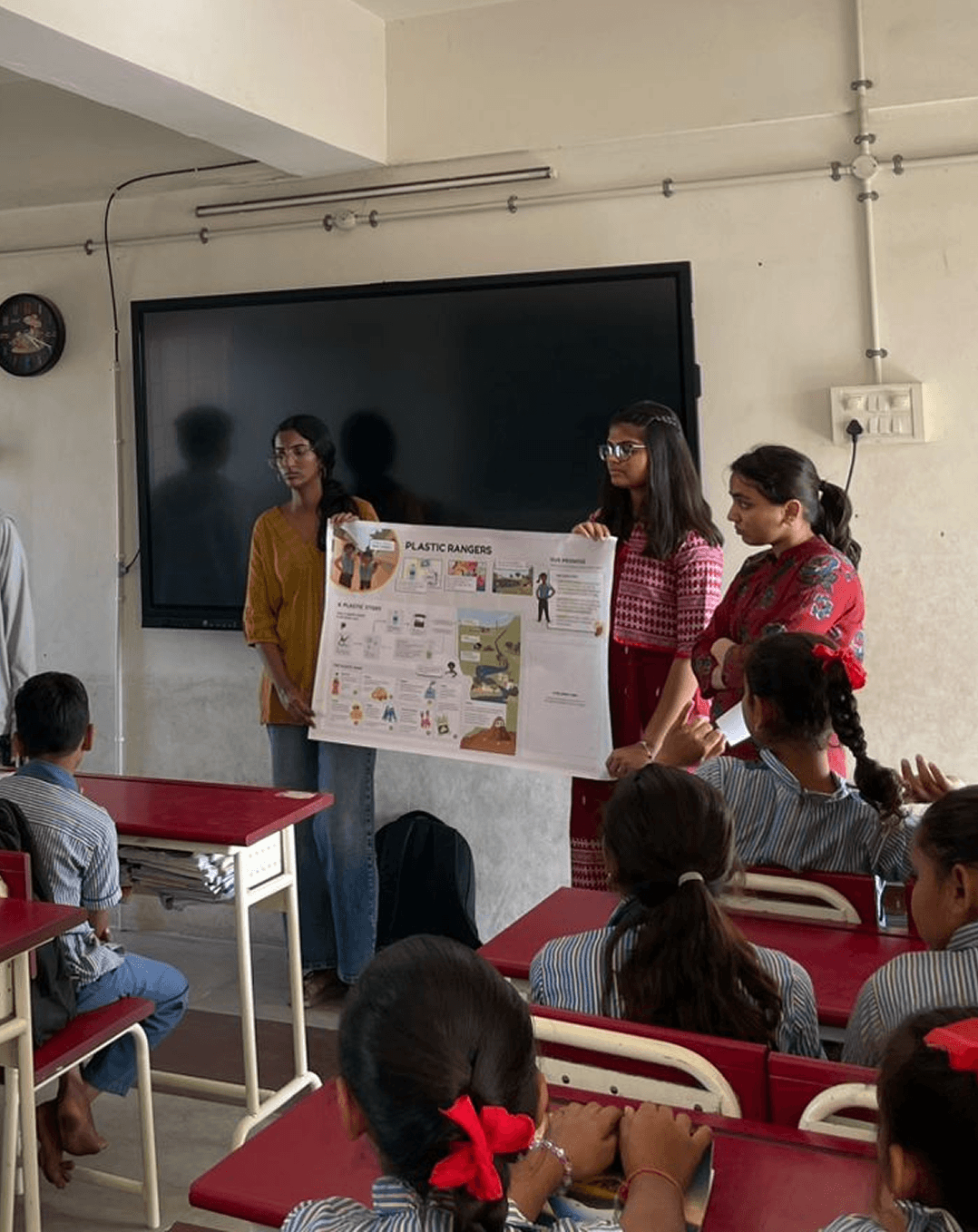
With this understanding, we ran a series of concept and MVP testing sessions in schools, refining the material based on direct feedback.
Given the programme's aim to create lasting impact, it was crucial to develop a realistic implementation plan, one that development partners and future organisations could easily adopt and maintain. The project's approach was recognised by the RCA x Design for Good Academy, and the material is now under a trial run with Yuva Unstopabble, extending its reach from the original Gujarat programme across India.
Final designs




Impact
Report from Yuva Unstoppable who will be implementing the material:
The first phase of the Plastic Rangers Workshop will be conducted in August 2026, 3,070 students across 25 government schools in Gujarat are expected to be covered during August 2026.
We see this as the first step in building an evidence-based programme that not only raises environmental awareness but also measures how it translates into meaningful actions and lifelong habits. Based on our current capacity, we expect to expand to 25–30 schools annually, integrating the programme into one of our flagship school transformation initiatives. This would enable us to reach approximately 80 schools (~10,000 students and 25,000–30,000 lives) by 2028, and 140–150 schools (~18,000 students and around 50,000 lives) by 2030, as students take these learnings back to their families and communities.
Collaborators
Jwalin Patel / TIDE President
Niharika Rai / TIDE Systems Coordinator
Sangeeta Bhaat / TIDE Systems Coordinator
Helen Robertson / DfG Impact and Partnership Lead
Jemima Girdwood / DfG Impact & Partnerships Coordinator
Ana Menendez / Service Design and Accessibility
Taro Krasienapibal / Product Designer
Salma Yusuf / Illustrator
Carlo Zinzani / UX Design
Madhulika Sundresh / UX Design